


Talk to Dtf Ghana
Opening Hours
Mon-Fri: 8:00 am - 6:00 pm

Contact us today.
T +233 (0) 53 519 6009
Email: service@dtfghana.com
Direct to Fabric (gh) Ltd.
No. 32 West McCarthy Rd. Durban House,Weija Junction, Accra
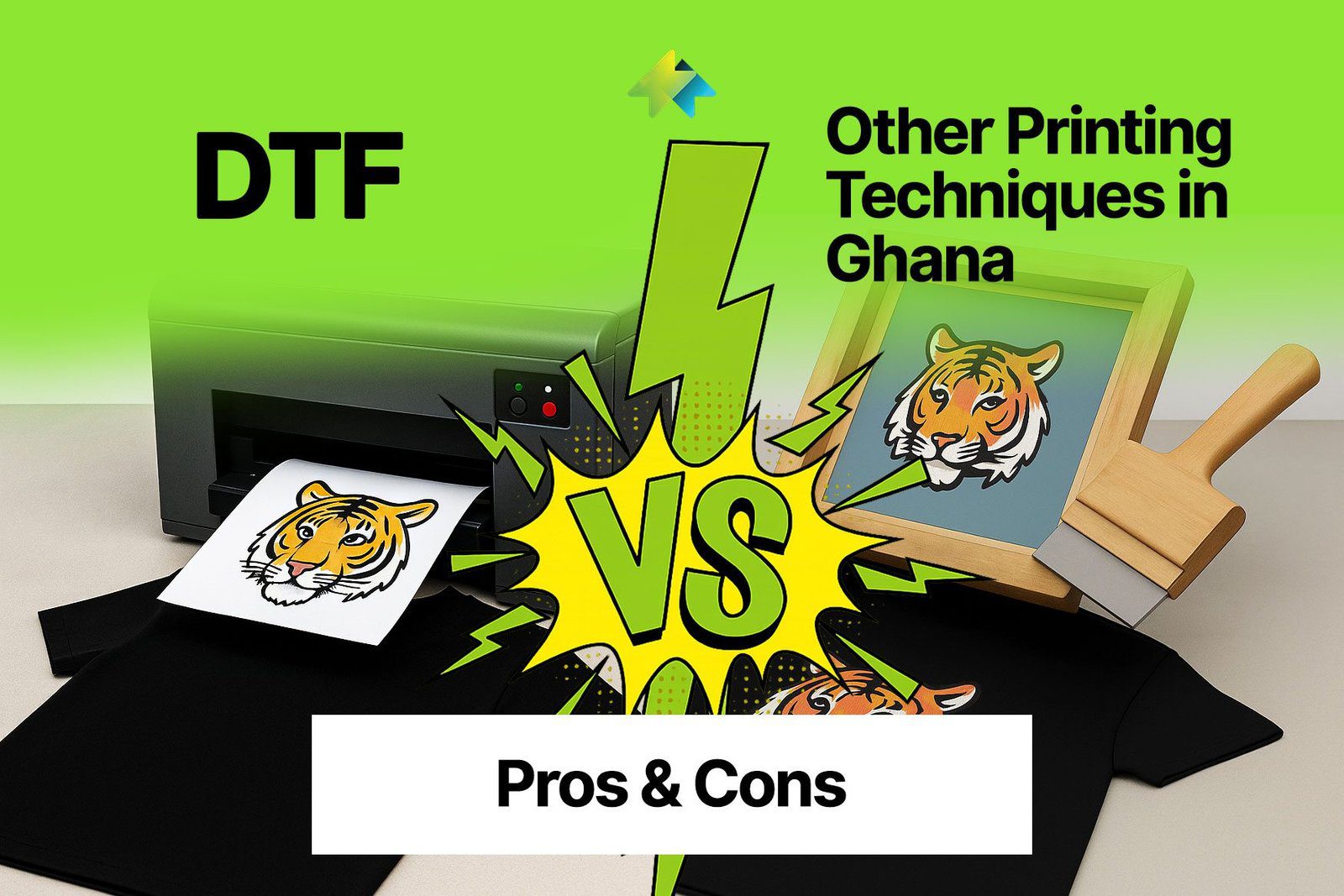
In Ghana’s growing fashion and merchandising industry, the way designs are printed can make all the difference. Whether it’s clothing brands in Accra, promotional items for events, or custom uniforms, businesses often weigh different printing options. While screen printing and sublimation remain popular, Direct-to-Fabric (DTF) printing has emerged as a modern solution that’s catching attention.
Direct-to-Fabric printing uses advanced inkjet technology to print directly onto textiles. Unlike traditional methods that rely on transfers or films, the ink bonds straight into the fabric, giving designs a sharp, durable, and professional finish. This method has become attractive for small businesses and fashion entrepreneurs who want both speed and flexibility.
One of the biggest advantages is how well DTF handles detail. Intricate designs, full-color images, and gradients print beautifully, making it easier to create standout fashion pieces. Since the process skips extra steps like screen preparation, it also saves time and cuts down waste. For Ghanaian designers who want to experiment with new styles or small-batch runs, this efficiency can be a game changer.

Another plus is fabric compatibility. Cotton, polyester, blends, and even specialty fabrics can be printed directly, opening more options for local creators. This versatility makes DTF appealing to businesses that want to cater to diverse customer preferences, from casual T-shirts to high-end fabrics.
However, the technology isn’t without its challenges. DTF machines can be costly to acquire and maintain, which may be a barrier for smaller shops just starting out. The inks and print heads require consistent care to avoid clogging, meaning operators must stay disciplined with maintenance. Power supply issues, which can be a common hurdle for Ghanaian businesses, also affect production since the printers rely on stable electricity.
When compared to screen printing, Direct-to-Fabric shines in flexibility and design variety but doesn’t always match screen printing’s cost efficiency for large bulk orders. Sublimation, on the other hand, delivers vibrant results but is limited mainly to polyester-based fabrics. DTF bridges that gap, offering both high-quality color and broader material use.
For businesses in Ghana, the choice often comes down to scale and purpose. Large-scale uniform or promotional printing still leans toward screen printing, but fashion-forward designers, custom shops, and small brands are finding DTF an ideal balance of quality, speed, and creativity.
As the industry evolves, Direct-to-Fabric printing has the potential to transform how local entrepreneurs approach branding and apparel. With the right investment and care, it offers an innovative way to produce standout products that compete both locally and globally.
Ready to take your designs to the next level? With our Direct-to-Fabric printing service- DTF Ghana, you can bring any idea to life, whether it’s for fashion, branding, or personal projects.
Get in touch today and let’s create prints that stand out in Ghana and beyond!

Mon-Fri: 8:00 am - 6:00 pm
© DIRECT TO FABRIC LTD. 2025. All rights reserved. Powered by Seo Digital